A cooling tower that doesn’t get consistent attention doesn’t just underperform. It fails at the worst possible time. Whether you’re managing a light commercial chiller system or a multi-cell industrial installation, a structured maintenance schedule is the difference between a tower that lasts 20 years and one that costs you a fortune in emergency repairs and downtime.
This guide covers everything you need to know: what to check weekly, what to do every season, and what your annual inspection should include.
Bookmark it. Print it. Build it into your facility management workflow.
Why Cooling Tower Maintenance Can’t Be Reactive
Cooling towers operate in demanding conditions: constant water flow, biological exposure, outdoor elements, and heavy mechanical loads. When a component starts degrading, the system compensates until it can’t anymore. By the time you notice a drop in performance, you may already be dealing with fouled fill media, a failing motor bearing, or worse, a Legionella risk.
Proactive, scheduled maintenance:
- Extends the life of your investment significantly
- Maintains peak thermal efficiency (even minor scale buildup reduces efficiency measurably)
- Ensures compliance with OSHA and ASHRAE 188 water treatment standards
- Prevents unplanned downtime that can halt operations entirely
The good news is that most maintenance tasks are straightforward if you do them on schedule. Here’s exactly what that schedule should look like.
Weekly Maintenance Checklist
Weekly checks don’t need to take long, but skipping them has a compounding effect over time.
Water Quality
- Test and log water pH (target range: 6.5–9.0)
- Check and adjust biocide/disinfectant levels
- Measure conductivity and adjust blowdown accordingly
- Inspect water clarity in the basin
Visual Inspection
- Check for visible leaks at connections, valves, and the distribution system
- Confirm that the float valve and makeup water feed are functioning properly
- Listen for unusual vibration or noise from the fan assembly and motor
Operational Check
- Verify fan rotation direction (especially after any power interruption)
- Confirm the sump temperature and system pressures are within expected range
- Check that louvers, fill media, and drift eliminators appear clear and undamaged
Monthly Maintenance Checklist
Basin & Water System
- Inspect the cold water basin for sediment, algae, or sludge accumulation
- Check strainers and clean as needed
- Test water for Legionella risk factors (turbidity, temperature stratification)
- Verify blowdown/bleed-off rate against your water treatment program
Mechanical Components
- Lubricate fan shaft bearings per manufacturer specifications
- Inspect fan blades for erosion, cracking, or imbalance
- Check belt tension and condition on belt-drive systems
- Verify motor amp draw against rated load
Structure & Housing
- Inspect casing panels and structural connections for corrosion or damage
- Check that access doors and panels are secure
Seasonal Maintenance Checklist
Spring Startup (Post-Winter)
Spring is the most critical maintenance window of the year. If the system was winterized or ran at reduced capacity, bring it back online methodically.
Before Starting the System
- Drain and flush the cold water basin completely
- Clean and disinfect the entire system (basin, fill, distribution headers, and eliminators) per ASHRAE 188 guidelines
- Inspect all valves and replace any cracked or freeze-damaged components
- Check fan blades, motor mounts, and coupling alignment
- Test all electrical connections for corrosion or degradation
Water Treatment
- Shock-dose the system with biocide before startup
- Establish your chemical treatment program for the season
- Set blowdown controls and verify float valve operation
Commissioning
- Run the system briefly under observation before returning to normal operation
- Verify water distribution is even across all fill sections
- Log baseline operational data (amp draw, water temperature delta, flow rate) for comparison throughout the season
Summer Peak Season
During high-load months, your tower works hardest. Increase monitoring frequency.
- Increase water quality testing to twice weekly during heat events
- Monitor approach temperature (difference between leaving water temperature and ambient wet bulb). Degrading fill or scale buildup will show up here first.
- Inspect and clean nozzles and distribution headers if flow patterns are uneven
- Watch motor temperatures during sustained peak operation
- After any significant storm, inspect the basin and intake for debris
Fall Preparation & Partial Shutdown
If the system will be winterized:
- Flush and drain the basin, fill, and all piping that could freeze
- Treat any water that will remain in the system with appropriate anti-freeze or corrosion inhibitor
- Lubricate all bearings with a cold-weather grease specification
- Inspect and cover louver openings where appropriate
- Disconnect and secure electrical components per your lockout/tagout procedure
- Document the system condition for spring reference
If the system will run year-round:
- Evaluate whether a low-ambient control kit or bypass is needed
- Inspect drift eliminators, which are critical for cold-weather operations to prevent icing
- Confirm that heaters (if installed) in the sump are functional before freezing temperatures arrive
Annual Maintenance Checklist
Once a year, ideally aligned with a natural shutdown or low-demand period, conduct a comprehensive inspection and service. This is when you catch the issues that weekly and monthly checks can’t fully reveal.
Fill Media
- Remove and inspect fill packs for fouling, biological growth, and structural integrity
- Replace sections that are significantly blocked, damaged, or degraded
- Clean remaining fill with a pressure wash or chemical flush as appropriate
Mechanical Drive System
- Inspect the gearbox (if equipped) for oil level, leaks, and gear condition
- Replace gearbox oil per manufacturer schedule
- Check and record fan blade pitch angle; reset if out of specification
- Inspect coupling, sheaves, and belts for wear; replace as needed
- Verify motor alignment and re-align if required
- Megger test motors and check for insulation degradation
Basin & Structure
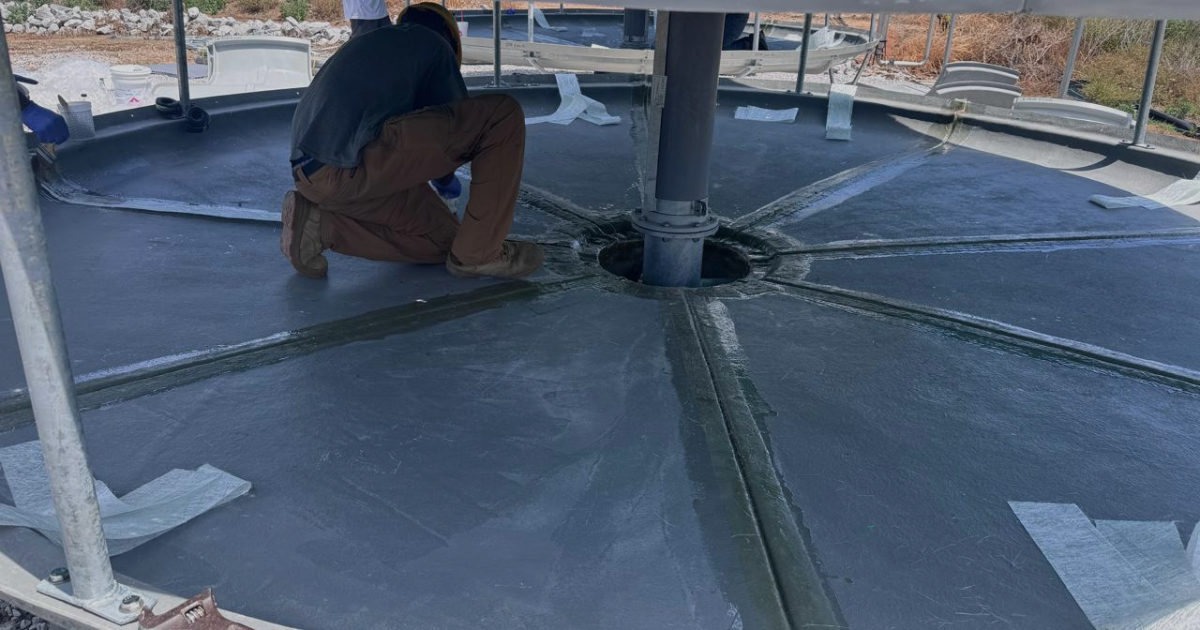
- Sandblast and recoat basin with epoxy coating if the protective layer is compromised
- Inspect all structural steel, hardware, and fasteners for corrosion
- Check anchor bolts and seismic restraints
- Inspect and recaulk any penetrations, seams, or expansion joints as needed
Water Distribution System
- Inspect all distribution headers, spray nozzles, and arms
- Replace worn or cracked nozzles to maintain even distribution
- Clean and inspect hot water basin (cross-flow towers) or spray header (counter-flow towers)
Drift Eliminators
- Inspect for proper seating and structural integrity
- Replace sections that are warped, cracked, or excessively fouled
Water Treatment Review
- Conduct an annual water quality audit with your chemical treatment provider
- Review Legionella Water Management Plan (required under ASHRAE 188 for many facilities)
- Recalibrate blowdown controllers and conductivity meters
- Sample and test for corrosion byproducts and biological indicators
Documentation & Compliance
- Update your maintenance log and equipment records
- Review manufacturer service bulletins for your specific model
- Confirm that your water management plan is current and signed off
Cooling Tower Maintenance Log: What to Track
Consistent record-keeping isn’t just good practice. It’s essential for troubleshooting, compliance, and proving due diligence. Your log should capture:
| Parameter | Frequency | Notes |
|---|---|---|
| pH, conductivity, biocide levels | Weekly | Log values, not just pass/fail |
| Blowdown rate | Weekly | Adjust based on cycles of concentration |
| Motor amp draw | Monthly | Compare to baseline |
| Approach temperature | Monthly (or continuous) | Performance degradation indicator |
| Lubrication service | Per manufacturer | Log date and product used |
| Basin cleaning | Seasonally/Annually | Document condition before and after |
| Water treatment audit | Annually | Include Legionella risk assessment |
Common Cooling Tower Problems and What They Signal
Higher-than-normal approach temperature: usually indicates fouled fill, scale on heat transfer surfaces, or reduced airflow from a fan or motor issue.
Excessive makeup water consumption: check for leaks, excessive drift, or a malfunctioning blowdown control system.
Vibration or noise: can indicate fan blade damage or imbalance, worn bearings, misaligned coupling, or cavitation in the pump.
Biological growth in the basin: often a sign that biocide dosing is insufficient, blowdown rate is too low, or system residence time is too high.
Corrosion in the basin or structure: may indicate pH drift outside the acceptable range or a gap in the protective coating.
Catching these symptoms early, through consistent monitoring, prevents a manageable maintenance task from becoming a major repair.
When to Call a Professional
Some maintenance tasks are well within the capability of a trained facilities team. Others are best handled by a qualified service technician, particularly:
- Full system cleaning and disinfection per ASHRAE 188
- Gearbox service and gear inspection
- Electrical testing (meggering motors, verifying controls)
- Structural assessment of aged systems
- Water management plan development and auditing
If you’re not sure whether your system needs a service visit, err on the side of caution. The cost of a professional inspection is a small fraction of what an unplanned failure (or a Legionella liability) can cost.
CTS Replacement Parts Support
At Cooling Tower Systems, Inc., we stock replacement parts for every tower we manufacture, including fill media, nozzles, fan blades, motors, float valves, and hardware. If your annual inspection turns up worn components, we can help you get the right parts quickly so your maintenance window doesn’t stretch longer than it needs to.
Call us at 800-752-1905 or browse our replacement parts catalog to find components for your specific model.
Cooling Tower Systems, Inc. manufactures and supports cooling towers across a full range of commercial and industrial capacities. Questions about your system? Contact our team directly. We’re happy to help.