Data centers generate enormous amounts of heat. Every server, switch, and storage array converts electrical energy into heat — and that heat has to go somewhere. Cooling isn’t optional; it’s mission-critical infrastructure.
As AI workloads, cloud computing, and edge deployments drive server densities higher, the thermal-management challenge has intensified. Facilities that ran at 5–10 kW per rack a decade ago are now managing 20, 40, or even 80 kW per rack. Cooling systems have to keep pace.
One of the biggest decisions in data center thermal management is how that heat gets rejected to the atmosphere — and the two main options, cooling towers and air-cooled chillers, behave very differently at scale. Here’s how the cooling chain works, how the two approaches compare, and what to look for when you specify a system.
Bottom line: for small edge deployments, air-cooled equipment can be practical. At enterprise and colocation scale, cooling towers win on efficiency, capacity, redundancy, and free-cooling potential — and they directly improve PUE.
How data center cooling works
Most large data centers use a chilled-water system for heat rejection. The chain typically looks like this:
- IT equipment generates heat, captured by computer-room air handlers (CRAHs) or in-row coolers.
- Chilled water circulates through coils in those units, absorbing the heat.
- The warmed water returns to a chiller plant, where the heat transfers to condenser water.
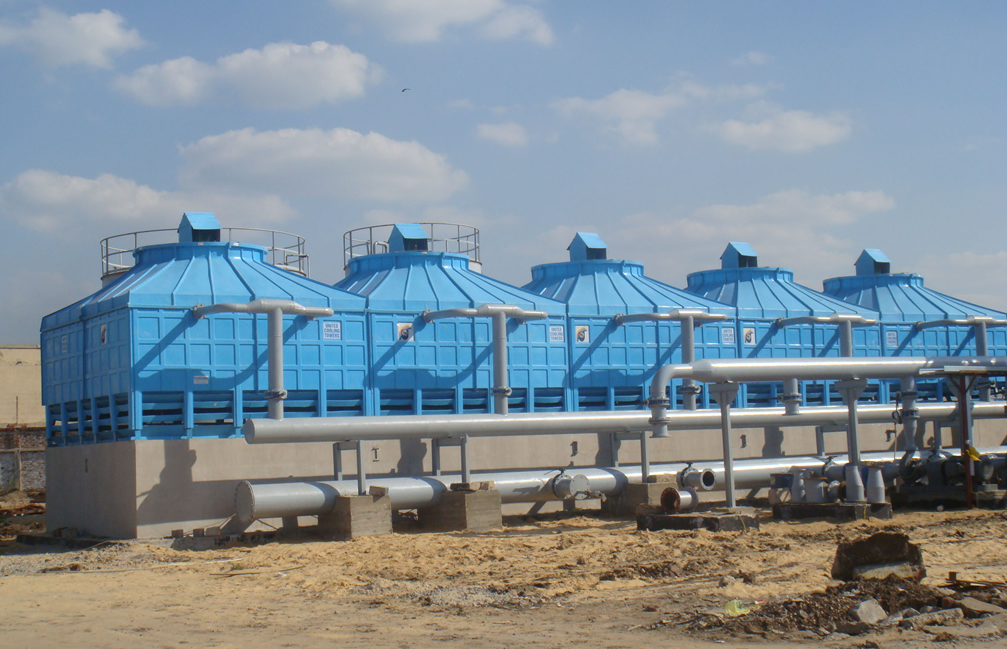
- The condenser-water loop carries the heat to the cooling tower, which rejects it to the atmosphere through evaporation.
- The cooled condenser water returns to the chiller, and the cycle repeats.
In this architecture, the cooling tower is the final heat-rejection point for the entire facility. Its capacity, reliability, and efficiency directly affect the data center’s PUE (Power Usage Effectiveness).
Cooling towers vs. air-cooled chillers for data centers
For smaller edge deployments, air-cooled condensers can be practical. But at the scale most enterprise and colocation data centers operate, cooling towers offer decisive advantages:
Higher efficiency
Cooling towers reject heat through evaporative cooling — significantly more efficient than air-cooled rejection. That means lower chiller energy use and better PUE, a critical metric for both operating cost and sustainability reporting.
Greater capacity
Evaporative towers handle far larger heat loads in a given footprint than air-cooled equipment. As rack densities climb, tower-based systems scale more effectively.
Redundancy options
Multi-cell configurations allow N+1 or N+2 redundancy, so maintenance or a failure on one cell doesn’t interrupt cooling — essential for any Tier III or Tier IV environment.
Free-cooling potential
In cooler climates, towers enable waterside economization, using cool ambient conditions to reduce chiller operation for much of the year — cutting annual chiller energy use 30–50% in the right climate.
What to specify for a data center cooling tower
Data center applications have specific requirements that differ from typical industrial use:
- Continuous operation: data centers run 24/7/365 — specify towers rated for continuous duty, not intermittent use.
- Redundancy: size the tower plant for N+1 so one cell can come offline for maintenance without impacting cooling.
- Low-noise options: many sites have noise ordinances — ask about low-noise fan configurations and sound-attenuation options.
- Legionella management: high-profile facilities need robust water-management plans; ensure the tower design supports proper treatment programs.
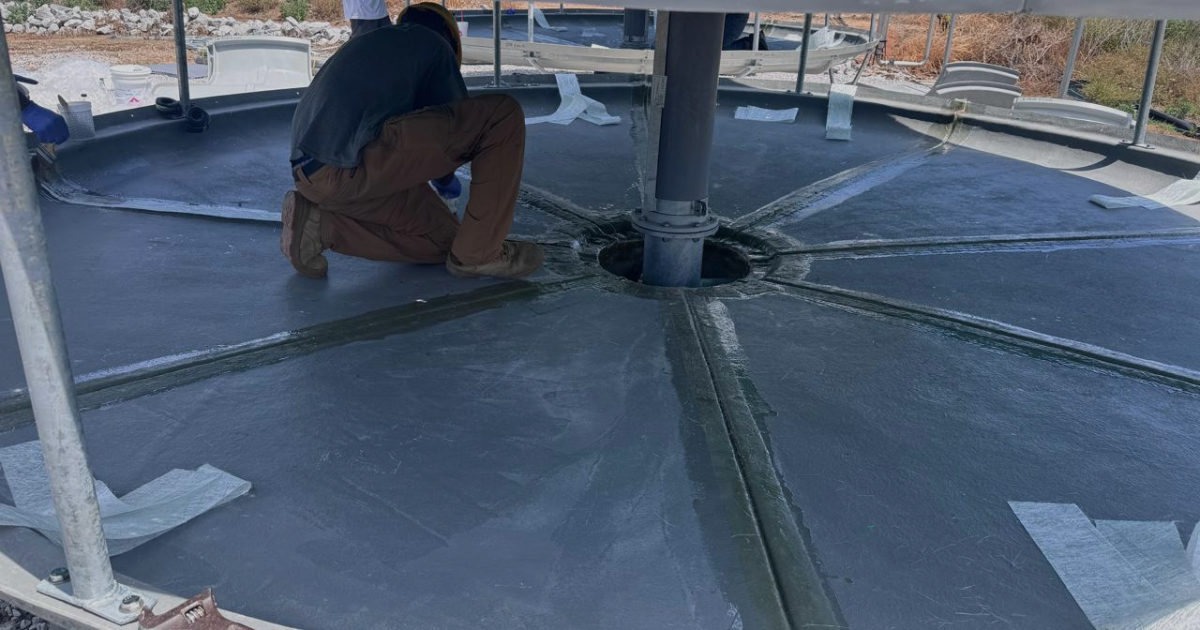
- Materials: FRP (fiberglass) construction doesn’t rust and isn’t subject to electrochemical or galvanic corrosion. It resists most cooling-tower water-treatment chemicals and handles high-chloride environments far better than many metals — extending service life and reducing corrosion risk in high-uptime environments.
- Monitoring integration: modern data centers expect BMS integration — confirm the tower and controls are compatible with your building management system.
Specifying a data center cooling tower?
CTS manufactures counterflow induced-draft FRP towers from 3 to 500+ tons, made in the USA and backed by full engineering support — sizing, redundancy planning, and replacement of existing equipment.