Energy efficiency has become one of the most important considerations when selecting or upgrading a cooling tower. Rising electricity costs, stricter sustainability goals, and increasing maintenance expenses have shifted the focus from initial purchase price to total lifecycle cost. For many facilities, the least expensive cooling tower to buy is rarely the least expensive to own.
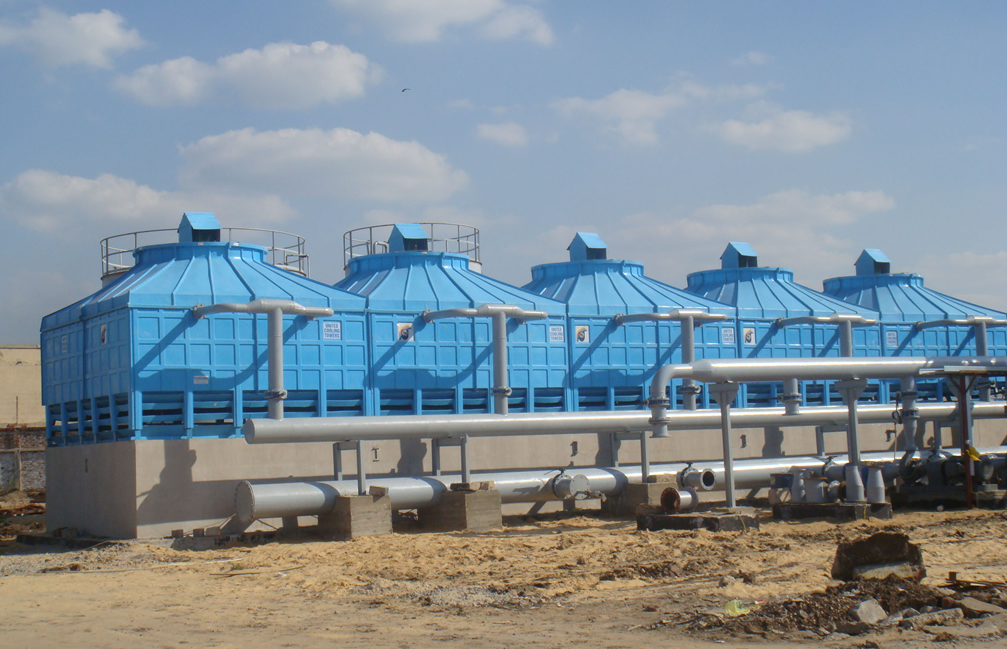
One solution that consistently delivers long-term value is the Fiberglass Reinforced Plastic (FRP) cooling tower. While FRP towers may require a higher initial investment than some traditional alternatives, they often reduce operating expenses through improved thermal performance, lower maintenance requirements, longer service life, and greater resistance to corrosion.
At Cooling Tower Systems, we frequently evaluate facilities where high operating costs are not caused by oversized chillers or inefficient process equipment but by aging cooling towers that no longer perform as designed. Upgrading to a properly engineered FRP cooling tower often improves system efficiency while reducing maintenance demands and extending equipment life.
Understanding how FRP cooling towers contribute to energy efficiency helps facility managers make investment decisions based on long-term operating costs rather than upfront pricing alone.
Why Cooling Tower Efficiency Matters
Every degree of unnecessary heat retained in the cooling water forces the entire cooling system to work harder.
When cooling towers lose efficiency, chillers operate at higher condensing temperatures, pumps run longer, fans consume additional power, and production equipment may struggle to maintain design operating conditions.
The result is often:
- Increased electrical consumption
- Higher maintenance costs
- Reduced equipment reliability
- More frequent production interruptions
- Shorter service life for connected equipment
Many owners focus on replacing motors or installing variable frequency drives when energy costs increase. While those upgrades certainly help, we often find that improving the cooling tower itself provides significantly greater system-wide savings because every downstream component benefits from lower water temperatures.
Energy efficiency should therefore be evaluated across the complete cooling system rather than focusing on a single piece of equipment.
What Makes FRP Cooling Towers Different?
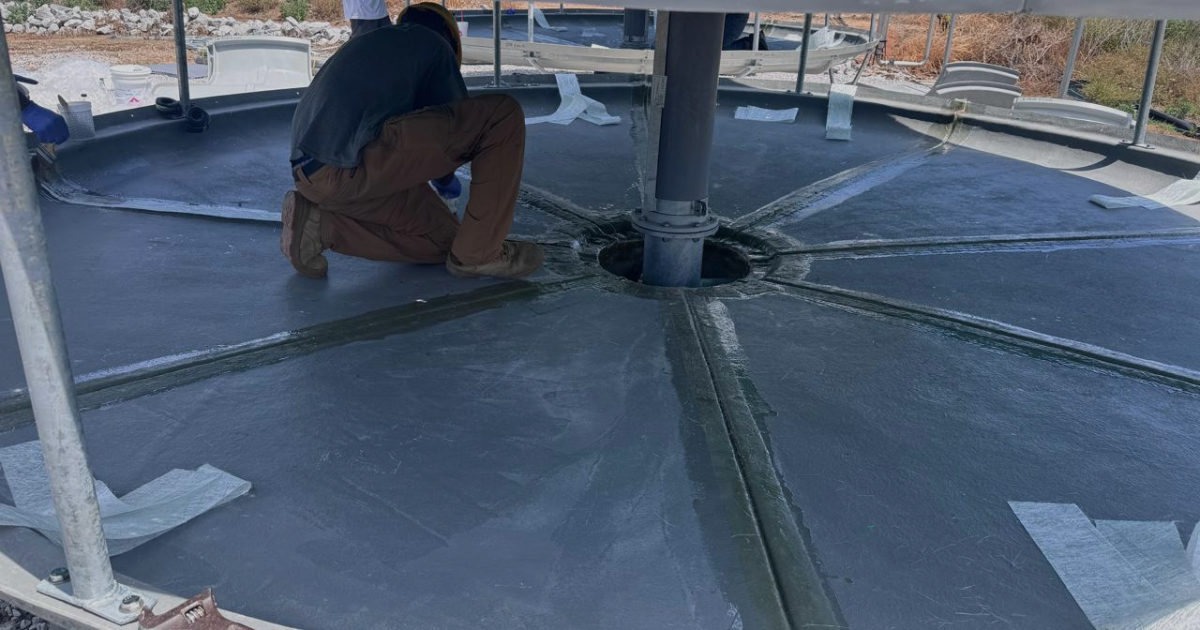
Fiberglass Reinforced Plastic combines glass fibers with durable resin systems to produce structural components that are lightweight, corrosion resistant, and exceptionally durable in demanding industrial environments.
Unlike galvanized steel or untreated wood, FRP does not rust, rot, or deteriorate when continuously exposed to moisture and treatment chemicals.
That durability provides important operational advantages.
Because FRP maintains its structural integrity for many years, airflow patterns remain more consistent, mechanical components stay properly aligned, and maintenance requirements are generally lower throughout the tower’s service life.
In many retrofit projects, we recommend FRP not simply because of its corrosion resistance, but because maintaining structural stability helps preserve thermal performance year after year. A cooling tower that performs consistently requires fewer corrective repairs and consumes less energy over its operating life.
Facilities planning major upgrades should also evaluate FRP cooling towers when comparing replacement options, particularly where harsh environmental conditions accelerate deterioration of conventional materials.
Better Thermal Performance Means Lower Energy Consumption
The primary purpose of a cooling tower is to reject heat as efficiently as possible.
When thermal performance improves, chilled water systems, condensers, compressors, and industrial processes require less energy to achieve their target operating temperatures.
Several characteristics of FRP cooling towers contribute to improved efficiency.
Consistent Airflow
Airflow is essential for effective heat rejection.
Because FRP structures resist corrosion and warping, they maintain the designed airflow path through the tower for many years. Consistent airflow allows fill media to perform as intended while reducing unnecessary fan workload.
Improved Fill Performance
Modern FRP cooling towers are commonly paired with high-efficiency fill media that maximizes contact between circulating water and moving air.
We’ve evaluated aging towers where replacing deteriorated fill restored significant cooling capacity without increasing fan horsepower. Efficient heat transfer reduces the workload on the entire cooling system, lowering annual operating costs.
Optimized Fan Operation
A properly engineered FRP cooling tower works efficiently with modern fan systems and variable frequency drives (VFDs).
Rather than operating continuously at maximum speed, fan motors automatically adjust to match thermal demand. During cooler weather or periods of reduced production, fan speeds decrease, lowering electrical consumption while extending the life of motors, gearboxes, and drive components.
The combined effect is a cooling system that responds more efficiently to changing operating conditions instead of consuming full power throughout the year.
Lower Maintenance Also Reduces Operating Costs
Energy efficiency is only one component of operating cost.
Maintenance labor, replacement parts, downtime, and production interruptions often represent a significant portion of a cooling tower’s total ownership cost.
One of the biggest advantages of FRP construction is its resistance to corrosion.
We’ve inspected many older galvanized steel towers where corrosion affected structural members, casing panels, and mechanical supports long before the thermal components reached the end of their service life. These repairs increase maintenance costs while creating unplanned outages.
FRP structures eliminate many of these corrosion-related issues, allowing maintenance teams to focus on routine inspections, water treatment, mechanical components, and cleaning rather than structural repairs.
For facilities operating in coastal environments, chemical processing plants, or locations with aggressive water conditions, this corrosion resistance can translate into substantial savings over the life of the cooling tower.
Lower Lifecycle Costs Deliver the Best Return on Investment
One of the biggest mistakes facility owners make is evaluating cooling towers based only on purchase price.
The true cost of ownership includes:
- Electrical consumption
- Water treatment expenses
- Maintenance labor
- Replacement parts
- Production downtime
- Equipment life expectancy
An FRP cooling tower may represent a higher initial investment than some conventional alternatives, but the long-term economics are often far more favorable.
We’ve worked with facilities where recurring corrosion repairs, structural deterioration, and increasing maintenance costs eventually exceeded the price difference between repairing an aging tower and investing in a modern FRP replacement. When lifecycle costs are evaluated over 20 years or more, the lowest purchase price is rarely the lowest operating cost.
A lifecycle cost analysis provides a far more accurate picture of the financial return than comparing equipment prices alone.
Is It Better to Repair or Replace?
Not every inefficient cooling tower needs to be replaced.
When evaluating an existing system, our engineers first determine whether declining performance is caused by worn components, poor maintenance, or an undersized tower.
In many cases, replacing fill media, drift eliminators, fan assemblies, or mechanical components restores much of the original performance at a significantly lower cost than a complete replacement.
However, replacement becomes the better long-term investment when:
- Structural corrosion is extensive.
- Maintenance costs continue to increase each year.
- Energy consumption is significantly higher than modern equipment.
- Production demands exceed the tower’s original design capacity.
- Replacement parts are becoming difficult to source.
Rather than recommending replacement by default, we compare the remaining service life of the existing tower with the projected operating costs of a modern FRP system. This engineering-first approach helps owners invest where the greatest long-term value can be achieved.
Facilities considering a system upgrade should also evaluate cooling tower replacement services to determine whether replacing aging equipment offers greater savings than continuing to repair it.
Best Practices for Maximizing Cooling Tower Energy Efficiency
Even the most efficient FRP cooling tower requires proper operation and maintenance to deliver maximum savings.
We recommend several practices that consistently improve long-term performance:
- Maintain an effective water treatment program to minimize scale and biological fouling.
- Inspect fill media regularly to ensure unrestricted airflow and heat transfer.
- Verify fan alignment and blade condition during preventive maintenance.
- Clean strainers, nozzles, and distribution systems to maintain uniform water flow.
- Monitor approach temperatures and fan performance to identify efficiency losses early.
- Use variable frequency drives where appropriate to reduce electrical consumption during partial-load operation.
Small declines in thermal performance often develop gradually. Routine inspections allow maintenance teams to correct issues before they increase operating costs or affect production.
Why Engineering Matters More Than Equipment Alone
Selecting an energy-efficient cooling tower involves much more than choosing FRP construction.
The tower must also be properly sized, matched to the process heat load, designed for local environmental conditions, and integrated with the rest of the cooling system.
We’ve evaluated facilities where replacing equipment alone failed to reduce operating costs because the underlying system design remained unchanged. In many projects, improvements in airflow, water distribution, fan control, and maintenance strategy contribute just as much to efficiency as the tower itself.
This is why every recommendation should begin with a complete engineering evaluation rather than a simple equipment comparison.
Partner with Cooling Tower Systems to Reduce Operating Costs
Improving cooling tower energy efficiency is one of the most effective ways to lower operating expenses while increasing system reliability. Whether you’re evaluating an aging cooling tower, planning a facility expansion, or designing a new installation, selecting the right solution requires balancing thermal performance, maintenance requirements, energy consumption, and long-term lifecycle costs.
At Cooling Tower Systems, our engineers assess the complete cooling system before recommending equipment. We evaluate thermal loads, operating conditions, environmental factors, maintenance history, and future production requirements to help customers make informed investment decisions—not just equipment purchases.
If you’re looking to reduce energy consumption, improve cooling performance, or determine whether repair or replacement offers the best return on investment, contact Cooling Tower Systems for expert guidance and a customized quote.
Frequently Asked Questions
Why are FRP cooling towers more energy efficient?
FRP cooling towers maintain structural integrity, resist corrosion, and support consistent airflow over time. Combined with efficient fill media and modern fan controls, they help reduce the energy required to reject heat.
Do FRP cooling towers cost more initially?
In many applications, yes. However, lower maintenance requirements, reduced corrosion, improved durability, and lower operating costs often produce a better return on investment over the tower’s service life.
Can replacing an old cooling tower reduce energy costs?
Yes. Aging cooling towers frequently lose thermal efficiency due to corrosion, damaged fill media, worn mechanical components, and restricted airflow. Replacing or upgrading the system can significantly improve overall cooling efficiency.
Are FRP cooling towers suitable for harsh environments?
Yes. FRP is highly resistant to moisture, chemicals, and corrosion, making it an excellent choice for coastal facilities, chemical plants, manufacturing operations, and other demanding industrial environments.
Should I repair my existing cooling tower or install an FRP replacement?
The answer depends on the tower’s structural condition, maintenance costs, thermal performance, and remaining service life. A professional engineering assessment helps determine which option provides the best long-term value.
See the numbers on our cooling tower ROI and savings page.