
During long stretches of summer heat, pool water can warm up until swimming is no longer refreshing. Cooling Tower Systems (CTS) helps homeowners, property managers, hotels, HOAs and recreational facilities explore pool cooling equipment built on our FRP cooling tower experience. Tell us about your pool, your location and your target water temperature, and our team will help you review equipment options and request a quote sized to your application.
✔ Corrosion-resistant FRP construction ✔ Residential & commercial applications ✔ Sizing & quotation support
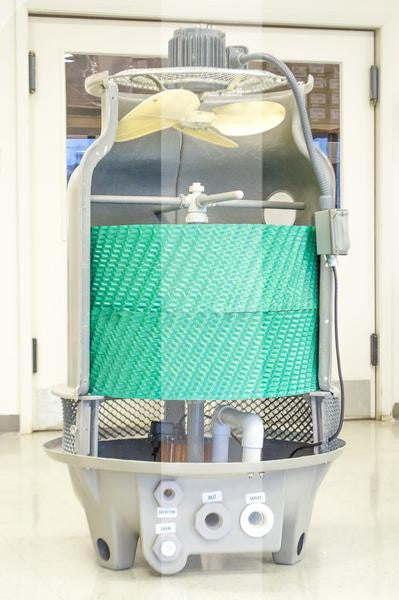
In warm climates, pools absorb a large amount of solar heat every day. Long sunny hours, high air temperatures, warm nights and shallow depths can all push water temperature well above a comfortable range, and once a pool is warm it can stay that way for weeks.
Residential pools usually need a compact system that fits the backyard and the existing filtration loop. Commercial pools at apartments, hotels and clubs hold more water, see heavier use and often need equipment that can keep up with longer operating hours.
Because local climate, pool volume, surface area and circulation rate all affect results, the right pool cooling system starts with proper equipment sizing rather than a one-size-fits-all product.
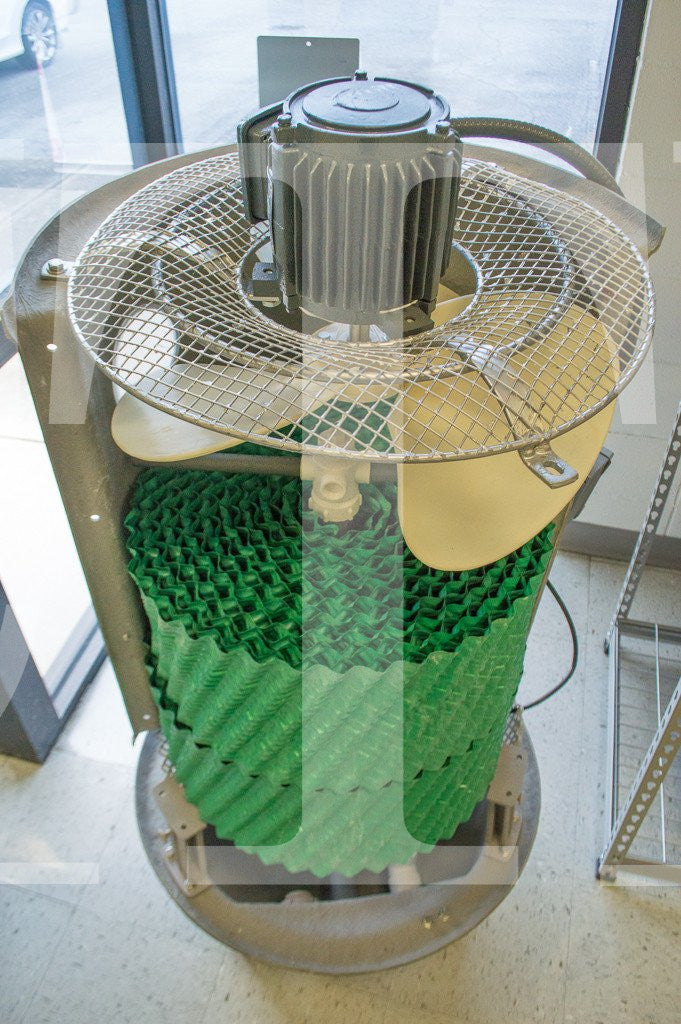
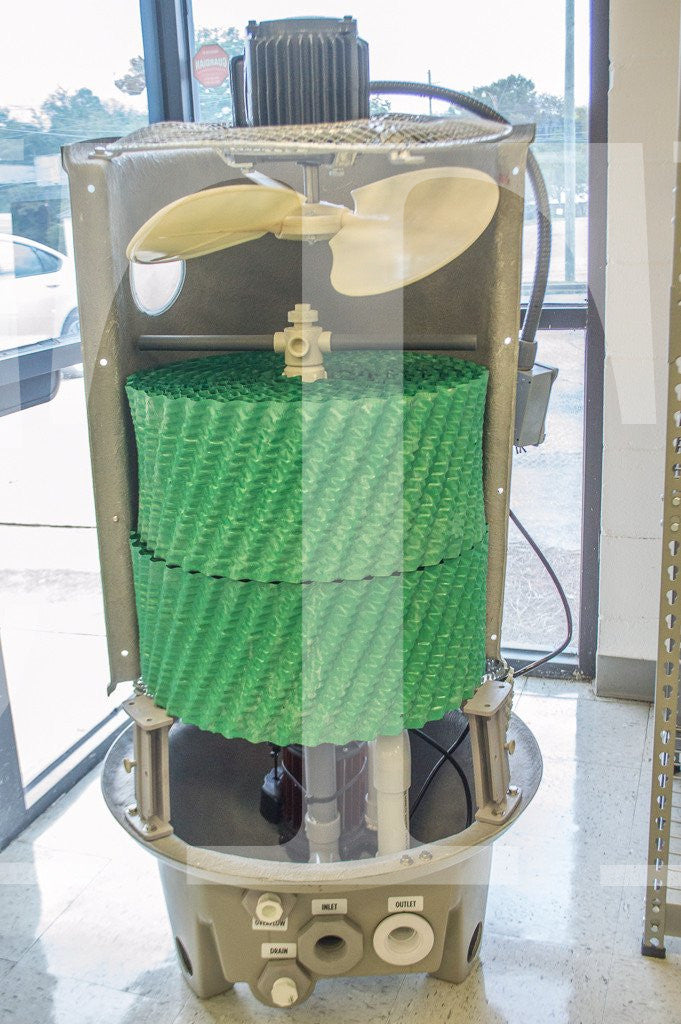
An evaporative pool cooling tower works on the same principle as an industrial cooling tower: it rejects heat from the water to the surrounding air. Performance depends on the local wet-bulb temperature and humidity, the airflow and fill media, and the flow rate provided by the pump.
Warm pool water is pumped from the filtration loop to the cooling equipment.
Water spreads across fill media while a fan draws air through, so a small portion evaporates and carries heat away.
The cooled water is collected in the basin and returned to the pool through the circulation system.
Depending on the configuration, a system may use a heat exchanger to keep pool water isolated from the tower. Our team will review water chemistry, controls and circulation requirements with you during sizing.
From single-family backyards to large commercial pools, CTS works with property owners and facility teams to match cooling equipment to the application.
Community pools serve many residents and hold larger water volumes. A properly sized pool cooler helps property managers keep amenities comfortable through peak summer use.
High-use guest pools need consistent comfort through the season. We help hospitality teams evaluate commercial equipment, operating hours and placement.
Backyard pools in hot climates can become too warm by midsummer. We review your pool size, existing equipment and space to discuss suitable options.
Shared pools need reliable equipment and predictable budgets. We support boards and managers with sizing, installation and maintenance planning.
Large recreational pools carry bigger cooling loads. We help facility managers select equipment for capacity, durability and serviceability.
Installers, mechanical contractors and developers can work with CTS on equipment selection and quotes for client projects.
| Factor | Evaporative pool cooling | Mechanical pool chiller |
|---|---|---|
| Cooling method | Evaporation and heat transfer | Refrigeration cycle |
| Climate considerations | Depends on wet-bulb conditions | Controlled cooling across varied conditions |
| Temperature control | Weather-dependent | Typically more precise |
| Electricity use | Fans, pumps and system design | Compressor efficiency and cooling load |
| Water use | Evaporation and possible blowdown | Depends on system design |
| Maintenance | Water treatment, cleaning and mechanical parts | Refrigeration and mechanical parts |
Evaporative pool coolers are often considered in hot, drier regions where wet-bulb conditions favor evaporation and simple mechanical design is valued. Mechanical chillers may suit applications that need tighter temperature control regardless of humidity. The best choice depends on your climate, pool size, budget and performance goals, and our team can help you compare options for your site.
Every pool is different. To recommend equipment, CTS evaluates:
Equipment recommendations are confirmed by CTS after reviewing your pool details.
Final installation requirements depend on the equipment configuration and site conditions. Typical considerations include:
CTS designs and supplies FRP cooling towers, pumps and replacement parts for commercial and industrial customers. We bring that equipment knowledge to pool cooling projects:
Learn more about FRP vs. galvanized steel cooling towers.
Pool cooler pricing depends on pool size, location, equipment configuration and installation requirements. Total cost typically includes the equipment, pumps and components, installation, electrical work, and ongoing water, energy and maintenance costs. Share your project details and we will prepare a custom quote.
A pool cooler is equipment that removes heat from pool water. Evaporative pool coolers use a fan, fill media and water circulation to reject heat to the air, similar to a small cooling tower.
Pool water is pumped to the cooler, spread across fill media where a portion evaporates and carries heat away, then returned to the pool cooler than it arrived.
A pool cooler typically uses evaporation, so performance depends on the weather. A pool chiller uses a refrigeration cycle and usually offers more precise temperature control.
Yes. Commercial pools can use pool cooling equipment when it is sized for the pool volume, usage and local climate. Contact CTS to review your project.
Pool coolers can be applied to backyard pools. CTS will review your pool size and existing equipment to confirm a suitable option.
Results depend on climate, wet-bulb temperature, pool volume, sun exposure and equipment size. CTS can estimate expected performance once we review your site details.
Evaporative cooling is less effective when humidity and wet-bulb temperatures are high. We will discuss expected performance for your location before you buy.
Cost depends on capacity, configuration, pumps, installation and electrical work. Request a quote for pricing based on your pool.
Typical maintenance includes water treatment, cleaning the basin and fill, checking fans and pumps, and seasonal shutdown or winterization where needed.
Share your pool volume, location, current and desired temperature, and circulation details. CTS will help you size and select equipment.
Tell us about your pool and our cooling specialists will help with product selection, equipment sizing and a custom quote.
Prefer to talk?
800-752-1905