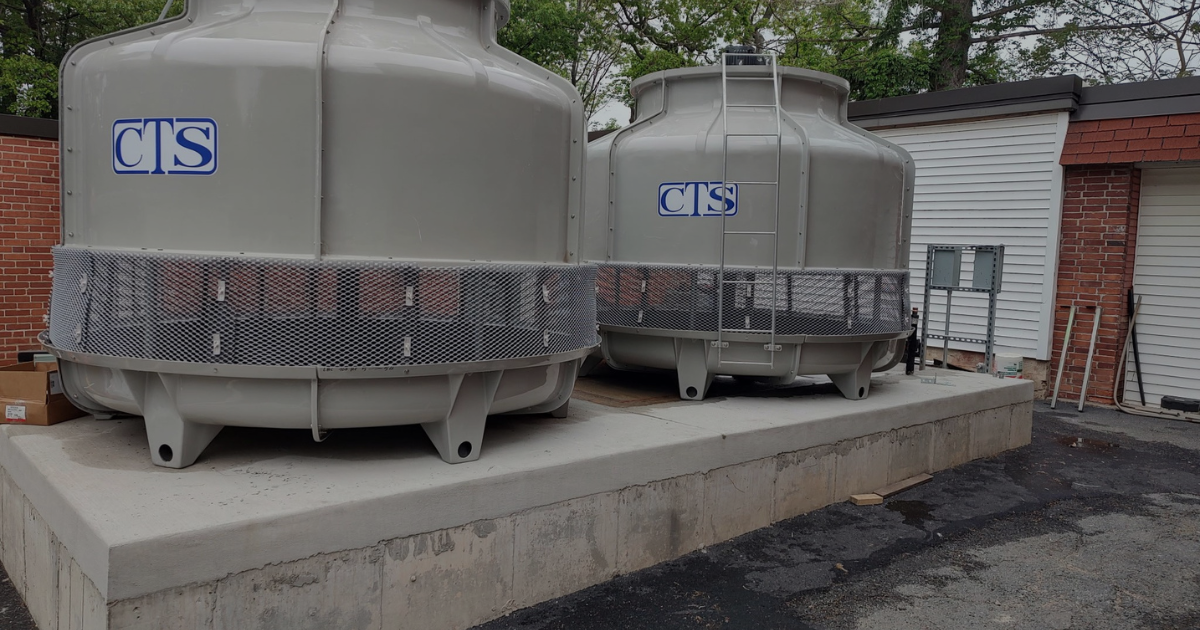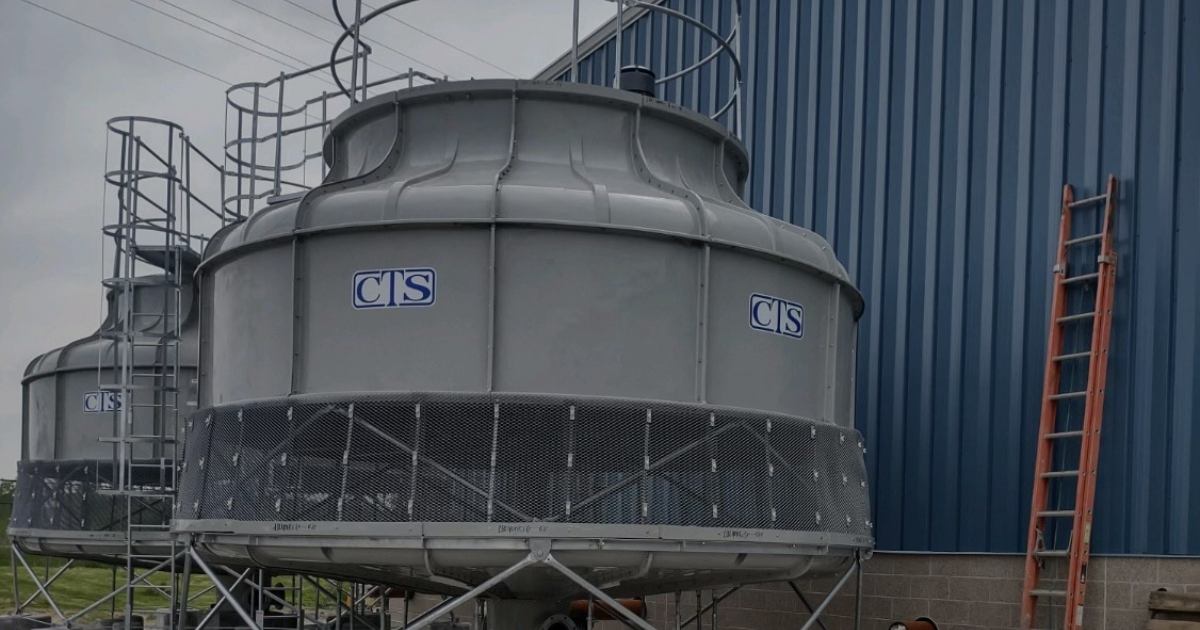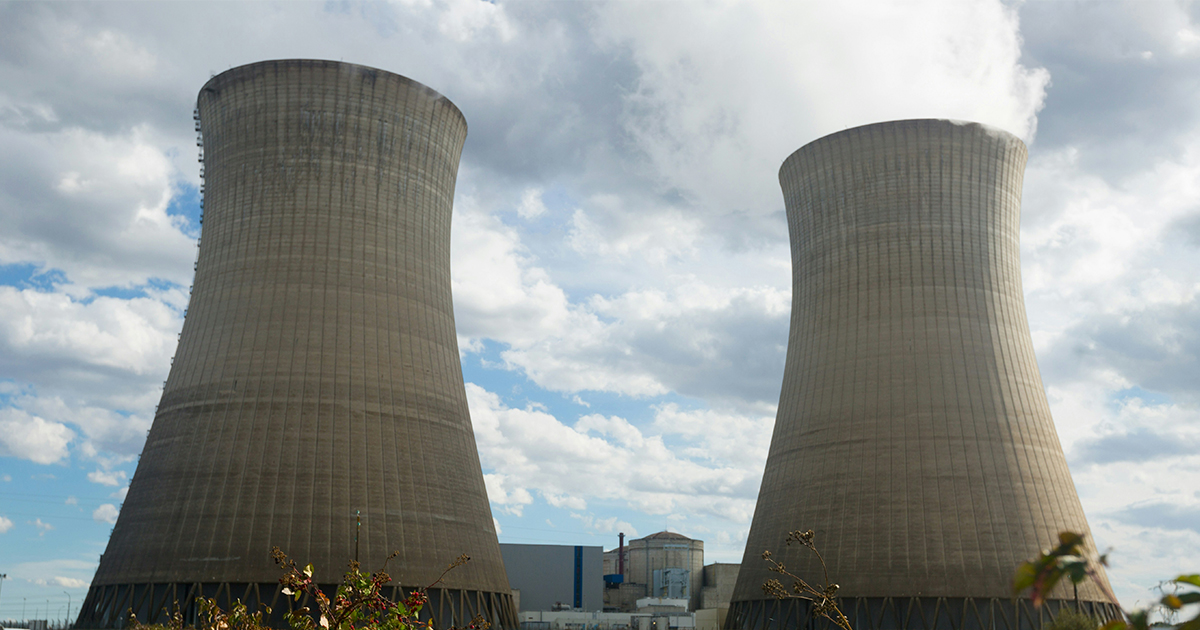
Modern facilities rely on industrial cooling tower systems to reject heat efficiently and prevent equipment and processes from overheating. They are widely used in power generation, manufacturing, chemical plants, hospitals, data centers, and large office complexes.
There are several types of cooling towers, including closed-circuit cooling towers, each suited for specific performance needs, operating environments, and site conditions. The main categories include mechanical draft, natural draft, open-circuit, closed-circuit, hybrid, and modular designs. This section focuses on mechanical draft cooling towers, explaining how they operate, their subtypes, and where each is typically applied.
Mechanical Draft Cooling Towers
Mechanical draft cooling towers use powered fans to move air through the system rather than relying on natural convection. This mechanical airflow provides greater control, efficiency, and flexibility in installation. Because of their active design, these towers can be placed both outdoors and indoors when connected to proper ducting systems.
There are two primary configurations based on fan placement and airflow direction: induced draft and forced draft.
Induced Draft Cooling Towers
In induced draft designs, one or more fans are mounted at the top of the tower. These fans pull air upward through the fill media, creating a low-pressure area that draws in cooler air from the sides or base. For additional technical terminology, visit our cooling tower glossary. This upward movement helps minimize the recirculation of warm, moist discharge air back into the system.
Induced draft cooling towers are known for their high cooling efficiency and relatively quiet operation since the fan noise is partially dispersed at the exhaust point. However, placing fans and drives at the top increases structural complexity and may eventually require specialized cooling tower replacement parts and maintenance access over time.
Advantages:
- Efficient and stable cooling performance
- Lower likelihood of air recirculation
- Quieter overall operation
Disadvantages:
- Higher initial installation and structural costs
- More complex maintenance access at the top
Common Uses:
- Large-scale HVAC systems for campuses or commercial buildings
- Industrial facilities where performance consistency, reliability, and verified thermal performance are crucial often rely on CTI-certified cooling towers.
Forced Draft Cooling Towers
Forced draft towers feature fans located at the base or sides of the unit. These fans push air into the tower, forcing it upward through the fill as water flows downward. This opposing flow promotes effective heat transfer in a compact footprint.
Because the fans are positioned at the bottom, maintenance is easier, and the system is more accessible. However, since air exits the tower at a lower velocity, warm discharge air can recirculate into the intake area if not properly managed. In addition, the fans operate in a warm and humid airstream, which may increase corrosion and service needs over time.
Advantages:
- Compact and space-efficient design
- Easy ground-level maintenance access
- Suitable for indoor or low-clearance installations
Disadvantages:
- Greater risk of warm air recirculation
- Higher exposure of fan components to moisture and corrosion
Common Uses:
- Smaller or indoor HVAC systems
- Facilities with limited roof space or height restrictions
Counterflow vs. Crossflow:
Counterflow Cooling Towers
In counterflow cooling towers, air travels vertically upward while water flows downward through the fill media. Because the airflow directly opposes the falling water, heat transfer efficiency is generally higher compared to crossflow designs. Counterflow towers are often more compact and are commonly used in facilities where maximizing thermal performance within a smaller footprint is important.
Advantages:
- High thermal efficiency
- Compact design with smaller footprint
- Reduced freezing risk in colder climates
Disadvantages:
- Higher air resistance and fan energy requirements
- More difficult internal maintenance access
Common Uses:
- Industrial manufacturing facilities
- Power generation applications
- Facilities with limited installation space
Crossflow Cooling Towers
Crossflow cooling towers allow air to move horizontally across the downward flow of water. Water is distributed through gravity-fed basins positioned above the fill media, simplifying maintenance and inspection. These systems are generally quieter and easier to service than counterflow designs, though they may require a larger footprint to achieve similar cooling capacity.
Advantages:
- Easy maintenance and access
- Lower airflow resistance and fan energy usage
- Quieter operation
Disadvantages:
- Larger physical footprint
- Slightly lower thermal efficiency compared to counterflow designs
- Potential for freezing in extremely cold climates
Common Uses:
- Commercial HVAC systems
- Large campuses and office complexes
- Facilities prioritizing easy service access